As would be expected of an area which includes the famed racecourses of The Curragh, Punchestown and Naas among its many amenities, Kildare is the horse county par excellence. The horse is so central and natural a part of Irish life that you'll find significant stud farms in a surprisingly large number of counties. But it is in Kildare that they reach their greatest concentration in the ultimate equine county. Thus it's ironic that, a mere 400 million years ago, Kildare was just a salty ocean where the only creatures remotely equine were the extremely primitive ancestors of sea horses.
But things have been looking up for the horse in County Kildare ever since, and today the lush pastures of the gently sloping Liffey and Barrow valleys provide ideal country for nurturing and training champions. Apart from many famous private farms, the Irish National Stud in Kildare town just beyond the splendid gallops of The Curragh is open for visitors, and it also includes a remarkable Japanese garden, reckoned the best Japanese rock garden in Europe, as well as the Museum of the Horse.
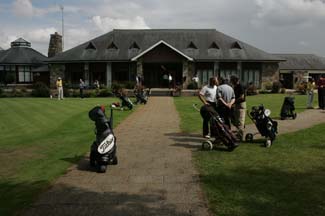
Another cornerstone of Kildare life is golf – the 2006 Ryder Cup between Europe and the US was staged in the county at the K Club, with the home team winning this “most passionate golf experience”.
The gradual development of Ireland’s motorway network has been particularly beneficial to Kildare, as it has lightened the traffic load through the county’s towns. In fact, getting off the main roads is what enjoyment of life in Kildare is all about. The county's proximity to Dublin means that in the most recent population survey, Kildare was second only to neighbouring Meath in its increase, the numbers growing by 21.5% to 164,000. Yet it is surprisingly easy to get away from the traffic, and you'll quickly find areas of rural enchantment and unexpected swathes of relatively untamed nature.
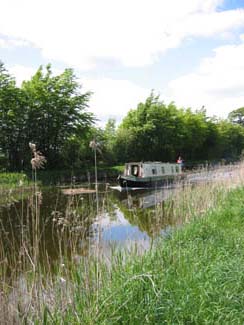
In the northwest of the county is the awe-inspiring Bog of Allen, the largest in Ireland, across whose wide open spaces the early engineers struggled to progress the Grand Canal on its route from the east coast towards the Shannon. Such needs of national transport are intertwined through the county's history. But between the arterial routes, railroads and canals, there is an easier pace of life, and gentle country with it.
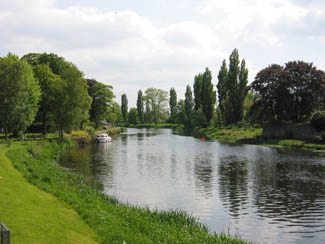
A southern leg of the Grand Canal curves away to become the Barrow Navigation, winding it way to Waterford. Beyond Athy, it goes near Kilkea, birthplace of Antarctic explorer Ernest Shackleton, whose growing fame is increasingly celebrated in his native county where his ancestors were involved in building the meeting -house which is now the Quaker Museum in Ballitore.
Local Attractions and Information
Athy
Heritage Centre +353 (0)59 863 3075
Ballitore
Quaker Museum & Library +353 (0)59 862 3344
Carbury
Ballindoolin House & Garden +353 (0)46 953 1430
Celbridge
Castletown House +353 (0)1 628 8252
Curragh
The Curragh Racecourse +353 (0)45 441 205
Edenderry
Grange Castle & Gardens +353 (0)46 973 3316
Kilcock
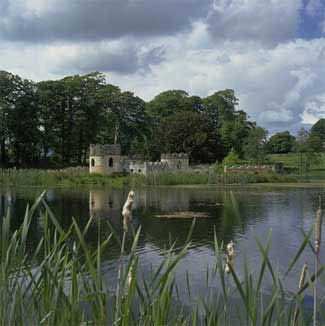
Larchill Arcadian Gardens (follies)+353 (0)1 628 7354
Kildare (Tully)
Irish National Stud +353 (0)45 521 617
Kildare (Tully)
Japanese Gardens +353 (0)45 521 251
Kildare Tourism Information +353 (0)45 522 696
Kill
Goff's Bloodstock Sales (frequent) +353 (0)45 886 600
Naas
Kildare Failte +353 (0)45 898 888
Naas
Naas Racecourse +353 (0)45 897 391
Newbridge
Riverbank Arts Centre +353 (0)45 433 480
Punchestown
Punchestown Racecourse +353 (0)45 897 704
Straffan
Lodge Park Walled Garden +353 (0)1 628 8412
Straffan
Steam Museum +353 (0)1 627 3155
Timolin-Moone
Irish Pewtermill +353 (0)59 862 4164










There are currently no comments
Leave a comment
Not a member? Register for your free membership now!
Or leave a comment by logging in with: