

Anthony O’Toole explores the relationship between food, gathering and storytelling – and why the Centre of Food Culture Ireland’ ...
Samhain - A Tradition with a Future


Anthony O’Toole explores the relationship between food, gathering and storytelling – and why the Centre of Food Culture Ireland’s flagship event, Samhain Festival of Food & Culture, matters
 At this time of year, the work changes in my Fat Tomato garden. We are gathering, preserving and deciding which seeds to save for the next growing season. As the evenings draw in and the winter chill arrives, there is still plenty to do.
It is this rhythm that brings Samhain to mind. Traditionally marking the beginning of winter on 1 November, with celebrations taking place the evening before, Samhain signalled the move into the darker part of the year. Alongside Imbolc, Bealtaine and Lughnasa, it was one of the four great seasonal festivals of the traditional Irish calendar. The turning year gave people reasons to gather, celebrate and prepare for what lay ahead.
Thinking of Samhain brings me back to gatherings I have created over the years to mark this time of year: a Celebration of Wild Fruit, Nuts and Berries at Wilton Castle; the Dark Shadow Supper Club series at Loftus Hall; and the It’s a Wild Game winter event series for Euro-Toques Ireland. Each explored the season’s bounty through food, place and storytelling, bringing people closer to the landscape and its traditions.
A few years ago, I explored Samhain traditions with my good friend Lorraine O’Dwyer, the forager, folklorist and tour guide behind Gallivanting.ie. What stayed with me was the custom of leaving food or a place at the table for departed family members, who were believed to return at this time of year. Hospitality extended even to those no longer there. Many of us still make that connection when we cook a recipe someone taught us or serve a dish they loved.
That relationship between food, gathering and storytelling relationship between food, gathering and storytelling This social enterprise connects people with their food, its origins and its makers through education, discussion and shared experiences. The festival brings that ambition to life across the town.
I have attended nearly every edition, contributed to talks, hosted table discussions and helped events come together. I have watched it grow into a gathering where food and drink takes its place alongside music, literature, craft and performance.
 Food is culture. Farming is culture too. Farming has shaped our landscape, language and communities in Ireland. Hunger, abundance, the work of the field and the welcome offered at a table run through our writing, poetry, painting, songs and stories. We recognise their cultural value in a novel, a play or a piece of music. Yet I feel we are slower to recognise the growers, fishers, cooks and producers whose lives and traditions help inspire them.
Perhaps food’s cultural value gets lost between agriculture, business, health and tourism. Our national conversations readily measure output, exports and visitor spending. I would like greater recognition of the craft knowledge being passed on and the regional traditions and communities being sustained. Making farmhouse cheese or smoking wild fish involves years of practice and judgement, just as carving a sculpture or playing music does.
For those of us working in hospitality, this culture is expressed in what we serve at breakfast, whose produce we buy and the stories we share with guests. These everyday decisions help determine which producers thrive and what visitors understand about the place they are in.
 At the Samhain Festival of Food & Culture those connections become part of the experience. Literary pub crawls, music, dancing, storytelling and farm walks bring people through Kells and its surrounding countryside. Events in the Red Chapel bring food, music and folklore into the same room. At the Sheridans Irish Food Fair, tasting something can lead to meeting its maker and hearing about a family tradition, immigration or the highs and lows of working with the Irish weather.
This year’s festival runs from 5 to 8 November, with Friday’s Samhain Symposium asking “Irish Food Culture: What’s the Story?” It is a question worth exploring with the people growing, making, cooking and writing that story every day.
And then there are the chats. Over the years, conversations with my fellow Irish Food Champion Olivia Duff, one of the driving forces behind the festival and the Centre of Food Culture Ireland, and the growers, producers, chefs, writers and food historians who gather in Kells have stayed with me. Sometimes they happen on stage; often they continue between events or over a drink.
How do we pass on traditional skills that cannot be taught at school? How much influence should supermarkets have over the Irish food story? And why do we not have a Minister for Food in Ireland?
These questions run through my own work across food, hospitality and tourism. Samhain gives us space to explore them together, hear different experiences and build relationships that continue beyond the weekend.
That is why this festival matters. It gives food culture a public space: somewhere to celebrate it, question it and help another generation become part of it.
If we value Irish food as part of our culture, we must value the people who keep making it.
This November, I encourage you to make time for Kells. Meet a producer, hear a story, share a table and join the conversation. That is how a tradition finds a future.
Explore the programme at https://foodcultureireland.ie/samhain/. There is something for everyone.
 Anthony O’Toole is a food, hospitality and tourism specialist working with producers, chefs, communities and destinations across Ireland. He is the founder of Fat Tomato, an edible garden and living pantry in North Wexford. His work explores the connections between food, culture, people and place. anthonyotoole.com | fattomato.ie
By same author
-
Samhain - A Tradition with a Future
What Story Does Your Food Tell?
Anthony O’Toole Shares Lessons from the 2026 Chef's Manifesto Action Hub at OmVed Gardens, LondonFood Feature - Slow Food Weekend of Flavour an ...
Slow Food Weekend of Flavour and Stories – AnthonyO’Toole’s Reflections from a magical couple of days in Comber, Co DownA LONG TIME COMING - ANTHONY O'TOOLE'S HORTICU ...
Perched on the picturesque Carrig Rua Hill in North Wexford behind his parents' house, Anthony’s tiny garden is now home to over 500 varieti ...SPECIAL EVENTS AT THE WORLD-RENOWNED WOODCOCK ...
Busy-bee chef ANTHONY O’TOOLE explains how he’s getting together with the legendary SALLY BARNES to host a Producer x Chef event serie ...Diary of a Failte Ireland Food Champion
This month Failte Ireland Food Champion Anthony O'Toole welcomes the recently released Fáilte Ireland Food and Drink Strategy for 2018-2023.Diary of a Failte Ireland Food Champion
Last June Anthony O'Toole was one of a group appointed as the new Fáilte Ireland Food Champions. So, one year later, what have they been u ...Diary of a Failte Ireland Food Champion
In the latest of his monthly columns, Failte Ireland Food Champion Anthony O'Toole welcomes the new food festival seasonDiary of a Failte Ireland Food Champion
April is one of my favourite months of the year. Not just because it is my birth month, but because the days are getting longer, the spring air is ...Diary of a Failte Ireland Food Champion
It’s February already. We’re six weeks into 2017 and already we’ve seen some promising developments around Ireland in terms of f ...Articles
-
2026 Georgina Campbell Irish Food & Hospitality ...
Winners of the Georgina Campbell 2026 Irish Food & Hospitality Awards announcedCookery & Artisan Foods - Inspired by BLOOM
The June bank holiday weekend had plenty going for it this year – not least the sunshine – and Bord Bia Bloom celebrated its 20th year ...Apps and Books
-
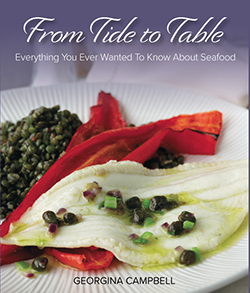
From Tide to Table by Georgina Campbell
Paperback edition of From Tide to Table - Everything You Ever Wanted To Know About Buying, Preparing & Cooking Fish and Seafood by Georgina Campbell
There are currently no comments
Leave a comment
Not a member? Register for your free membership now!
Or leave a comment by logging in with: