

During this spell of gorgeous weather, we've been feasting on huge salads. The garden is bursting with beautiful produce, there are scarcely enoug ...
THE DARINA ALLEN COLUMN - València


Famed for her passion for natural food, sustainability and biodiversity, Darina is a perfect example of the purposeful traveller. The main reason for a recent trip to Spain was to visit the Todolí Citrus Foundation in picturesque Palmera, on Valencia’s Mediterranean coast, which was founded by former Tate Modern director Vicente Todolí to preserve rare citrus varieties and compile a catalogue of farming knowledge to inspire future generations – and it is probably the world’s largest collection of outdoor citrus fruits. And, on the way, she spent a few days exploring València and the surrounding area…
I loved València, my very first visit. What a city, one of the oldest in Spain, it was founded by the Romans and has over 2,100 years of exciting history, heavily influenced by both Islamic and Christian rule. The 15th century was the Golden Age, a period of intense economic and artistic splendour, the beautiful Silk Exchange, Longa de la Seda, dates back to then - a must-visit, as is the awe-inspiring futuristic City of Arts and Sciences designed by Santiago Calatrava and Félix Candela.
València is one of the largest and best-preserved historic centres in Europe, a maze of narrow, leafy cobblestone streets with hidden plazas and stunningly beautiful architectural masterpieces with huge entrances and courtyards. Our hotel, The Cato, in the old town is built on the remains of the Roman walls. The beautiful València Cathedral, a mix of Gothic, Romanesque and Basque styles is just around the corner, one of over 40 prominent churches in the city, many built after the Christian conquest on the sites of former mosques.
 When you've got your fill of culture, don't miss the Mercat Central, one of the largest fresh produce markets in Europe, covering over 8,000 square ft and housing 400 plus stalls. The magnificent central dome floods the interior with natural light. It's a masterpiece of València modernism, completed in 1928.
There are an estimated 17 municipal markets in València. I managed to visit three and also loved the Ruzafa Market, particularly good for high-quality organic produce. Loved eating in the little market café where the stallholders have a hearty breakfast, many start with a glass of red wine, a little plate of olives, a pickled chilli and roasted peanuts, Pan con Tomate (see recipe below) grilled bread, crushed tomato and slivers of jamon.
The Rojas Clemente Market is much smaller but super chic, stalls also piled high with fresh produce, artisan cheeses, cured meats, butcher shops as ever selling every part of the animal from snout to tail, dry aged beef and cattle hooves, all ready to be transformed into hearty Spanish dishes.
The Fish Market has a mesmerising catch of really fresh fish, octopus, cuttlefish, squid, round and flat fish, sardines, tuna, gurnard, huge red prawns, langoustines, tiger shrimps, scallops, oysters, cañaillas (sea snails, purple or spiny dye-murex). We searched for Rossmore native oysters from Cork Harbour which the Spaniards prize highly. Many stalls open oysters, scallops, sea urchins and razor clams to eat on the spot with a glass of white wine or fino.
The Spaniards love to buy already roasted vegetables at the market, several stalls sell thick slices of pumpkin roasted in a wood burning oven with roasted seeds in the centre, roast onions, sweet potatoes, artichokes, apples, and pears, all ready to take home to enjoy. I longed to be able to chat to the stallholders to get a deeper understanding of the ingredients but my Spanish is dismal although I can read a menu in virtually every language!
Be sure to buy some produce at the markets, don't just take photos!
Bacalao, salt cod in its many iterations, is also a perennial favourite, as is bottarga (cured mullet roe). I bought some and also little shreds of bacalao called bolsitas ingles to scatter over salads, some crispy cod skin (piel de bacalao) and cortezas (a Spanish snack made from pork rind). Not a scrap of the fish is wasted, not even the bones which are used to add body and soul to stocks, soups and many dishes.
 We drove out through the national park to El Palmar to see the rice paddies. València is the paella capital of Spain, so many versions, some with a mixture of meat and shellfish, others with game e.g. rabbit, chicken and artichoke which we greatly enjoyed at Ca Pepico in Meliana. The rice paddies are empty at this time of the year but one can still take a boat trip through the rivers, dunes and lakes.
We found a traditional bakery called Horno Heladeria that also served the famous rice drink, horchata and fartons, the long, sweet breadsticks to use as dips. They also sold several local pastries including coca de pasas y nueces which I have since made at home (see recipe below), it looks like a flat plop but tastes delicious.
There are also a few examples of the traditional whitewashed barracas, steep thatched reed straw houses in the area of El Palmar. We ate lots of delicious things in many Valèncian cafés, tapas bars and restaurants and my new obsession is sepia (cuttlefish). Look out for it in the English Market or at the Ballycotton Seafood. Love it dipped in a tempura batter or drizzled with aioli. Here's the recipe for the coca de pasas y nueces which wins no prizes for elegance but tastes delicious. Also, a recipe for Pan al Tomate, my favourite Spanish breakfast and super easy to make while you're still half-awake in the morning.
%20(BCS).jpg) Pan con Tomate (Spanish-Style Grilled Bread with Tomatoes)
Pan con Tomate (Spanish-Style Grilled Bread with Tomatoes)
The first of the new seasons Valèncian tomatoes were piled up in the markets when I visited – pan con tomate is at its very best when tomatoes are super ripe and intensely flavoured at the end of summer. Serves 1
Ingredients
2 slices of best quality white bread, sliced 1cm thick
1 garlic clove, cut in half
2 medium, very ripe tomatoes (1 tomato per slice of bread) or 1 large Spanish heirloom tomato
flaky sea salt and freshly ground black pepper
Spanish extra virgin olive oil
slivers of jamón (Spanish cured ham) (optional)
Method
Toast the bread. Rub with the cut half clove of garlic while still warm.
Grate the tomato down to its skin on the large side of an old-fashioned box grater. Season with flaky sea salt, freshly ground black pepper and a drizzle of the best extra virgin olive oil you can find. Spread on the warm bread. Delicious as it is but even better with a few slivers of jamón on top. Eat immediately.
 Paella
In Spain one can buy a gas ring specially for cooking paella for a picnic, how wonderful would that be? This is just one of myriad paella recipes – great for a party, you need a paella pan 46cm approximately. Serves 10-12
Ingredients
6 tbsp approximately of extra virgin olive oil
2 large onions, chopped
1 large green pepper, cut into 1cm cubes
1 large red pepper, cut into 1cm cubes
8 cloves garlic, sliced
1 free-range organic chicken, jointed and cut into smallish pieces
225g organic streaky pork, cut into cubes
salt and freshly ground pepper
1 tsp saffron
1kg paella rice (calasparra or acquerello) approximately (generous ½ cup per person)
1.8 – 2.4 litres homemade chicken stock (use more if needed)
1 chorizo sausage, sliced
450g frozen peas
450g mussels in shells
12 prawns in shells
Garnish: 4 very ripe tomatoes, flat parsley sprigs & coarsely chopped chives
Method
Put lots of olive oil in the paella pan. Add the pork and cook for a few minutes until the fat begins to run. Add the garlic, onions and peppers. Cook for 4-5 minutes, then add the chicken. Season with salt and freshly ground pepper. Then add the sliced chorizo.
Sauté for 15 minutes, soak a teaspoon of saffron in a cup of warm chicken stock and stir around. Add to the pan. Add the rice. Add stock to almost cover, stir to blend and then don't stir again unless absolutely necessary. Add the peas.
Bring to the boil and simmer really gently for about 20 minutes until the meat is cooked. About 5 minutes from the end of cooking, add the mussels and the prawns in their shells. Continue to cook until the mussels open and the prawns are cooked. Stand over it and move the ingredients around a little. Bring the paella pan to the table. Scatter with lots of flat parsley sprigs and some freshly chopped tomato and chives. Serve immediately directly from the pan. The crispy rice bits on the bottom of the pan are the best!
%20(BCS).jpg) coca de pasas y nueces
coca de pasas y nueces
A specialty of València, not sure what the recipe is for the ones we loved at Horno Heladeria bakery, but we’ve made this version and another without brandy and spice and they were both delicious – enjoy with a glass of sherry or a cup of tea.... Makes 4
Ingredients
80g milk
80g water
25g fresh yeast
30g honey
2 eggs
35g sunflower oil
500g strong white flour
100-150g granulated sugar
zest of 1 orange
pinch of salt
1 tsp mixed spice (optional)
100g raisins
50g brandy
75g fresh walnuts, chopped
walnut halves for the top of dough
Method
Soak the raisins in the brandy overnight
Next day, in a saucepan, gently warm the milk, water and honey. Transfer to a Pyrex jug and add the fresh yeast. Allow to sponge for 3-4 minutes until it appears active.
Whisk the eggs and oil in a separate bowl.
Add all the dry ingredients except the raisins, brandy and walnuts to a bowl.
Once the yeast is ready, mix all the wet ingredients with the dry ingredients to make a dough. Knead for 10 minutes, then add in the raisins, brandy and walnuts and knead gently to combine. Pop into a clean bowl, cover and allow to rise in your kitchen until the dough has doubled in size.
'Knock back' and divide into four portions (260-270g balls), allow to rest for 4-5 minutes. Shape into 15cm rounds x 1 1/2 cm thick approx. Transfer to a baking tray lined with parchment paper. (In Spain, the coca's are baked on a disc of rice paper). Allow to prove for about an hour.
Preheat the oven to 170°C/Gas Mark 3.
When ready to bake, brush lightly with egg wash. Arrange 6-8 walnut halves on top, slightly pushed into the dough and sprinkle with granulated sugar.
Bake in the preheated oven for 25-30 minutes approx. until pale golden and slightly crunchy. Cool on a wire rack.
By same author
-
THE DARINA ALLEN COLUMN - Summer Salads
THE DARINA ALLEN COLUMN - Slow Food in Clare
Darina has been on her travels again, in search of everything that’s best in natural food, sustainability and biodiversity – and this ...THE DARINA ALLEN COLUMN - València
Famed for her passion for natural food, sustainability and biodiversity, Darina is a perfect example of the purposeful traveller. The main reason ...THE DARINA ALLEN COLUMN - Celebrating the Iris ...
Famed for her love of natural food, sustainability, simplicity and sharing, who better than Darina Allen to hail the culinary virtues of the Irish ...THE DARINA ALLEN COLUMN - Best Burgers!
Who better than Darina Allen to share the secret of a delectable burger? Last month we featured a seriously delicious meat-free burger from Ali Ho ...THE DARINA ALLEN COLUMN - 'New' Winter Vegetab ...
Famed for her passion for natural food, sustainability, biodiversity – and good healthy eating – who better than Darina Allen to intro ...Darina Allen - London Calling!
Occasional visitors to London with an interest in food are always well advised to check out Darina’s latest recommendations before heading o ...THE DARINA ALLEN COLUMN - Donegal via Cavan
Famed for her curiosity about good practice in food production and support for producers and establishments providing sustainable hospitality, who ...THE DARINA ALLEN COLUMN - The Kai Cookbook
This month Darina Allen champions the indomitable Jess Murphy's much-anticipated book, The Kai Cookbook - and she shares some super recipes from t ...THE DARINA ALLEN COLUMN - SUMMER TOMATOES
You can’t beat naturally ripened tomatoes for flavour and, although Darina has grown less tomatoes this year while awaiting the completion o ...Articles
-
2026 Georgina Campbell Irish Food & Hospitality ...
Winners of the Georgina Campbell 2026 Irish Food & Hospitality Awards announcedCookery & Artisan Foods - Inspired by BLOOM
The June bank holiday weekend had plenty going for it this year – not least the sunshine – and Bord Bia Bloom celebrated its 20th year ...Apps and Books
-
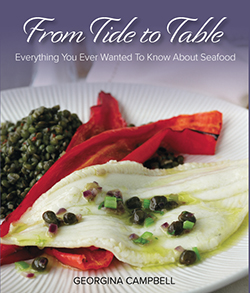
From Tide to Table by Georgina Campbell
Paperback edition of From Tide to Table - Everything You Ever Wanted To Know About Buying, Preparing & Cooking Fish and Seafood by Georgina Campbell
There are currently no comments
Leave a comment
Not a member? Register for your free membership now!
Or leave a comment by logging in with: