DUBLIN CITY GUIDE
A Town for our Times

As one of Europe’s fastest expanding economic centres during the era of rapid expansion, Dublin’s commercial and creative energy matched the vibrancy of its everyday life and hospitality. But if anything, the place is even more interesting in a time of marked economic adjustment, for within the modern development there is an old town where many meandering stories have interacted and combined to create today’s busy riverside and coastal metropolis. Through a wide variety of circumstances, it has become an entertaining place suited to the civilised enjoyment of life in the 21st Century. And part of the fascination of the place is found in Dubliners’ response to changed circumstances, for their city has known good times and bad.
With so much of it about, most Dubliners wear their city’s history lightly in an environment where the past lives with the present in ancient monuments, historic buildings, gracious squares and fine old urban style that still manages to be gloriously alive. This if anything is emphasised by the city’s modern architecture, seen particularly in the area around the International Financial Services Centre north of the river, and across the Liffey on George’s Quay. Further impressive development has taken shape along both sides of the Liffey towards the Bay while the Port itself is busier than ever to add a touch of reality to the waterside glass towers. And though the city’s official municipal spirit is expressed through The Spire in O’Connell Street, Dubliners themselves prefer to take their inspiration from the twin powerstation smokestacks of 1974 vintage – Laurel and Hardy - down at the rivermouth on the sea. Needless to say they caused disputation when they were being built, but now it seems most Dubs are quite fond of them.
The city and Ireland’s spirit is also expressed in the Gaelic Athletic Association’s impressive headquarters stadium at Croke Park which can accommodate over 80,000 spectators for several sports, while the legendary Lansdowne Road rugby stadium south of the river is being completely re-built as a 50,000 seater.
Dubliners may seem to take this dynamic interaction of ancient, classic and modern for granted, but then they have to get on with life. They’ve a vigorous appetite for it. So they’ll quickly deflate any visitor’s excessive enthusiasm about their city’s significance with some throwaway line of Dublin wit, or sweep aside some highfalutin notions about legendary figures of supposed cultural importance by recalling how their grandfathers had the measure of that same character when he was still no more than a pup making a nuisance of himself in the neighbourhood pub. Dubliners are well aware that it’s a good thing for writers to be unhappy, but you can have too much of a good thing.
The origins of the city’s name are in keeping with this downbeat approach. From the ancient Irish there came something which derived from a makeshift solution to local inconvenience. Baile Atha Cliath - the official name in recent times - means nothing more exciting than “the townland of the hurdle ford”. Ancient Ireland being an open plan sort of place without towns, the site of the future city was no more than a river crossing with several comfortable monasteries in the neighbourhood

But where the residents saw some inconvenience in the river, the Vikings sensed an opportunity. When they brought their longships up the River Liffey around 837AD having first raided at nearby Lambay in 795, they knew of a sheltered berth in a place which the locals of the hurdle ford called Dubh Linn - “the black pool”. The Vikings settled along Wood Quay and around Dublin Castle. This living memory of this busy Viking capital was celebrated in 2006 with the arrival under sail and oar in Dublin from Denmark of the 29.4 metres longship Sea Stallion of Glendalough, which had been re-created at the ancient Viking central capital of Roskilde as a remarkably exact facsimile of the original, built in Dublin in 1042 with timber from County Wicklow
Exhibited in the impressive museum in Collins Barrack until July 2008, Sea Stallion represents a Dublin creation of the 11th Century in an 18th Century setting. With a rugged but successful voyage back to Denmark July and August 2008, the beautiful vessel’s hull resemblance to a Venetian gondola was a tangible reminder of the enormous extent of the Viking world at its peak, though it was already declining in Ireland in 1042 as the raiders became absorbed into the population. Dublin was the Viking trading empire’s western capital at a time when the eastern capital was to be found far into Russia, with sea power extended deep into the Mediterranean and through the Adriatic to the future location of Venice.
Although the name of Ireland’s main Viking port was to go through mutations as the Vikings were succeeded in mnanagement by the Normans who in turn were in the business of becoming English and then more Irish than the Irish themselves, today’s name of Dublin is the one the Vikings came upon - though the pre-Viking Irish would have pronounced it as something more like “doo-lin”. With the Normans putting manners about the place, the descendants of Vikings and their Irish kinsfolk tended to move north of the Liffey where Oxmantown was Eastmantown – the Danes were the Eastmen while the Norwegian were the Northmen or Norsemen or Normans, and sometimes all three.
It was confusing for those who wanted to get on with day-to-day life in Dublin, but some sense of it was made with the Liffey divide which still prevails today in Dublin’s northside-southside interface, though analysts suggest that it is now becoming more east-west, with the M50 and Dublin’s coastal regions providing a barrier which the Normans knew as The Pale, a name which in itself has survived through various permutations of English power.
Be that as it may, the name Dublin still works best, for it was thanks to the existence of the black pool in the Liffey that Dublin became the port, trading base and cultural focus which evolved as the country’s natural administrative centre. Thus your Dubliner may well think that the persistent official use of Baile Atha Cliath was an absurdity. But it isn’t the business of any visitor to say so, for although Dublin came into existence through socioeconomic and historical pressures, it has been around for quite some time, and Dubliners have developed their own attitudes and their own way of doing things.
As for their seaport, it is still very much part of the city, and has never been busier – with forty major ship movements every day, sea and city are closely intertwined. However, Dublin Port is becoming a people-oriented transit focus, a giant ferry and cruise-liner port in the midst of residential, hospitality, administrative, business, service, entertainment and cultural centres. The opening of the Port Tunnel at the end of 2006 was at first seen as ultimately about providing convenient access for city folk to Dublin Airport north of the city. In time, it was thought, container freight will go to other developing purpose-built facilities, such as Bremore north along the east coast between Balbriggan and Drogheda, and several established ports to the southeast such as Rosslare, New Ross, and Bellview near Waterford. But at the end of 2008, Dublin Port was showing new vigour, and the realities of freight ships will be part of the scene for many years yet.
Located beside a wide bay with some extraordinarily handsome hills and mountains near at hand, the city has long had as an important part of its makeup the dictates of stylish living, and the need to cater efficiently for individual tastes and requirements. From time to time the facade has been maintained through periods of impoverishment, but even in the earliest Mediaeval period this was already a major centre of craftsmanship and innovative shop-keeping. Today, the Dublin craftsmen and shop-keepers and their assistants are characterful subjects worthy of respectful academic study. And in an age when “going shopping” had become the world’s favourite leisure activity, this old city has reinvented herself in the forefront of international trends.
Dublin virtually shunned the heavier side of the Industrial Revolution, or at least took some care to ensure that it happened elsewhere. More recently, the growth of computer-related industries was a very Dublin thing – what better way to deal with the vagaries of the Irish weather than in a workplace which had to be climate-controlled? And in times past, the city’s few large enterprises tended to be aimed at personal needs and the consumer market, rather than some aspiration towards heavy industry.
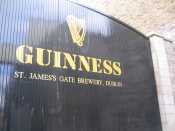
Typical of them was Guinness’s Brewery, founded in 1759. Today, its work-force may be much slimmed in every sense, but it still creates the black nectar, and if a new mash is under way up at the brewery and the wind is coming damply across Ireland from the west, the aroma of Guinness in the making will be wafted right into the city centre, the moist evocative essence of Anna Livia herself. Even when the main brewery is moved to an out-of-town location, the essence will still be created at St James’s Gate, where the imaginatively renovated Guinness Storehouse - with its interactive museums, restaurants and bars - provides a visitor centre of international quality, and Dublin’s most popular attraction.
Although some of the vitality of the city faded in the periods when the focus of power had been moved elsewhere, today Dublin thrives as one of Europe’s more entertaining capitals. While it may be trite to suggest that her history has been a fortuitous preparation for the needs of modern urban life in all its variety of work and relaxation, there is no denying Dublin’s remarkable capacity to provide the ideal circumstances for fast-moving people-orientated modern industries, even if those same people find at times that their movement within the city is hampered by weight of traffic. Nevertheless it’s a civilised city where the importance of education is a central theme of the strong family ethos, this high level of education making it a place of potent attraction in the age of information technology.
Such a city naturally has much of interest for historians of all kinds, and a vibrant cultural life is available for visitors and Dubliners alike. You can immerse yourself in it all as much or as little as you prefer, for today’s Dublin is a city for all times and all tastes, and if you’re someone who hopes to enjoy Dublin as we know Dubliners enjoy it, we know you’ll find much of value here. And don’t forget that there’s enjoyment in Dublin well hidden from the familiar tourist trails.
History is well-matched by modernity, or a mixture of both. The glass palaces of the International Financial Services Centre point the way to a maturing new business district which is a village in itself. Upriver to the westward, the award-winning transformation of the Smithfield area encompasses the popular Old Jameson Distillery Visitor Centre, another magnet for the discerning visitor - particularly someone who enjoys a sense of the past interacting with the present, not least in the age-old story of the creation of whiskey. The revitalisation of the Smithfield area has succeeded in creating its own special dynamic, and it’s clearly attractive for today’s new Dubliners.
When Dublin was starting to expand to its present size during the mid-20th Century, with people flocking in from all over Ireland to work in the city, it was said that the only “real Dub” was someone who didn’t go home to the country for the weekend. Nowadays, with Dublin so popular with visitors, the more cynical citizens have suggested that the surest test of a real Dub is someone who avoids Temple Bar, but here too the city’s instinct for community has re-asserted itself.
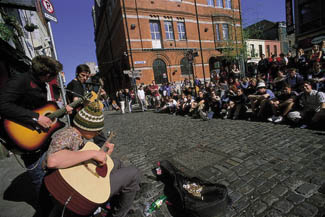
It’s rather unfair of any Dubliner to dismiss Temple Bar’s bustling riverside hotbed of musical pubs, ethnic restaurants, cultural events and nightclubs as being no more than a tourist ghetto. After all, in addition to its many places of entertainment and hospitality, Temple Bar is also home to at least 1,300 people, and they’ve their own neighbourhood Food Fairs and Specialist Markets like all other Dublin villages, and these days a higher spirit of civic pride has resulted in cleaner streets and buildings.
So there’s real life here too. And at the very least, it is Temple Bar which maintains Dubliners’ international reputation as round-the-clock party animals, which they’re quite happy to acknowledge - just don’t expect them to do it themselves. Another thing they don’t do is form an orderly queue. In fact, they don’t queue at all. Any real Dub reckons that queuing is a clear sign of mismanagement of personal time and endeavour. They make alternative arrangements.
As to meeting them if you haven’t made prior rendezvous arrangements, well – perhaps. Come nightfall, and your discerning Dubliner is more likely to be found in a pleasant pub or restaurant in one of the city’s many urban villages, places such as Ranelagh or Rathmines or Templeogue or Stoneybatter or Phibsborough or Donnybrook or Glasnevin or Ringsend or Dundrum or Clontarf or Drumcondra or Chapelizod. And then there are places like Stepaside or Howth or Glasthule or Foxrock or Dalkey which are at sufficient distance as scarcely to think of themselves as being part of Dublin at all.
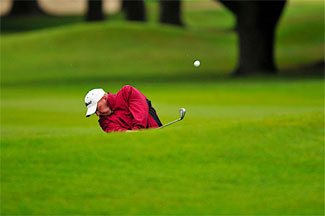
Or perhaps your Dubliner is into sport – nearly everyone is. If it’s a stadium sport – fine, you pay your way in like everyone else. There’s horse racing and greyhound racing too. That’s where you’ll find today’s real Dubs enjoying their fair city every bit as much as city centre folk. That is, if they’re not sailing on The Bay or playing golf. There are so many golf links and courses that it might be possible to play from one side of the city to the other, and as for boating and sailing – well, Dublin is only half of a circle, the other half is the sea, and the interaction between the two is mighty, as they’d say in Dublin.
Happy is the visitor who is able to savour it all, in and around this town for our times. If you do see it all, don’t tell us – we haven’t seen the most of it ourselves.
Try
Cheap Hotels in Dublin for quality Dublin Hotels at affordable prices
Local Attractions & Information
Abbey & Peacock Theatres Lower Abbey Street +353 (0)1 878 7222
Andrew's Lane Theatre off Exchequer Street +353 (0)1 679 5720
The Ark Arts Centre Eustace St., Temple Bar D2 +353 (0)1 670 7788
Bank of Ireland (historic) College Green +353 (0)1 661 5933
Botanic Gardens Glasnevin, D 9 +353 (0)1 837 4388
Ceol - Irish Traditional Music Centre Smithfield +353 (0)1 817 3820
Christchurch Cathedral Christchurch Place, D8 +353 (0)1 677 8099
City Arts Centre 23-25 Moss St., D2 +353 (0)1 677 0643
Croke Park GAA Stadium and Museum D3 +353 (0)1 855 8176
Drimnagh Castle (moat, formal 17c gardens) Longmile Rd +353 (0)1 450 2530
Dublin Airport +353 (0)1 814 4222
Dublin Castle Dame Street +353 (0)1 677 7129
Dublin Film Festival (February) +353 (0)1 679 2937
Dublin Garden Festival RDS (March) +353 (0)1 490 0600
Dublin International Horse Show, RDS, (August) +353 (0)1 668 0866
Dublin International Organ & Choral Fest. (June) +353 (0)1 677 3066
Dublin Theatre Festival (October) +353 (0)1 677 8439
Dublin Tourism Centre (restored church) Suffolk St. 1850 23 0330
Dublin Writer's Museum Parnell Square +353 (0)1 872 2077
Dublin Zoo Phoenix Park +353 (0)1 677 1425
Dublinia (living history) Christchurch +353 (0)1 475 8137
Farmleigh House, Phoenix Park +353 (0)1 815 5900
Farmleigh House Boathouse Restaurant +353 (0)1 815 7255 / 815 7250
Gaiety Theatre South King Street +353 (0)1 677 1717
Gate Theatre Cavendish Row +353 (0)1 874 4045
Guinness Brewery St Jame's Gate +353 (0)1 453 6700 ext 5155
Guinness Storehouse +353 (0)1 408 4800
Helix DCU Performing Arts Centre, Collins Avenue, D9 +353 (0)1 700 7000
Hugh Lane Municipal Gallery Parnell Square +353 (0)1 874 1903
Irish Antique Dealers Fair, RDS (October) +353 (0)1 285 9294
Irish Film Centre Eustace Street +353 (0)1 679 3477
IFSC Farm Market (Mayor Sq., Wed 10.30am-4pm) +353 (0)87 611 5016
Irish Museum of Modern Art/Royal Hospital Kilmainham +353 (0)1 671 8666
Irish Music Hall of Fame Middle Abbey Street +353 (0)1 878 3345
Irish Tourist Board/Failte Ireland Baggot St Bridge +353 (0)1 602 4000
Iveagh Gardens Earlsfort Terrace +353 (0)1 475 7816
Jameson Distillery Smithfield, Dublin 7 +353 (0)1 807 2355
Kilmainham Gaol Kilmainham +353 (0)1 453 5984
Lansdowne Road Rugby Ground Ballsbridge +353 (0)1 668 4601
Mother Redcaps Market nr St Patricks/Christchurch Fri-Sun 10am-5.30pm
National Botanic Gardens Glasnevin +353 (0)1 837 7596
National Concert Hall Earlsfort Terrace +353 (0)1 671 1888
National Gallery of Ireland Merrion Square West +353 (0)1 661 5133
National Museum of Ireland Kildare Street +353 (0)1 677 7444
National Museum of Ireland Collins Barracks +353 (0)1 677 7444
Natural History Museum Merrion Street +353 (0)1 661 881
Newman House St Stephen's Green +353 (0)1 475 7255
Northern Ireland Tourist Board Nassau Street +353 (0)1 679 1977
Number 29 (18c House) Lower Fitzwilliam Street +353 (0)1 702 6155
Old Jameson Distillery Smithfield, Dublin 7 +353 (0)1 807 2355
Olympia Theatre Dame Street +353 (0)1 677 7744
Pearse St Market (St Andrew’s Cntr.) Sats 9am-3pm +353 (0)1 873 0451
Point Depot (Concerts & Exhibitions) North Wall Quay +353 (0)1 836 6000
Powerscourt Townhouse South William Street +353 (0)1 679 4144
Pro Cathedral Marlborough Street +353 (0)1 287 4292
Project Arts Centre 39 East Sussex St, D2 +353 (0)1 679 6622
RDS (Royal Dublin Society) Ballsbridge +353 (0)1 668 0866
Royal Hospital Kilmainham +353 (0)1 679 8666
St Michans Church (mummified remains) Dublin 7 +353 (0)1 872 4154
St Patrick's Cathedral Patrick's Close +353 (0)1 453 9472
Shaw birthplace 33 Synge St., D 8 +353 (0)1 475 0854
Shelbourne Park Greyhound Stadium +353 (0)1 668 3502
Temple Bar Foodmarket Sat morning +353 (0)1 677 2255
The Dillon Garden 45 Sandford Rd, Ranelagh, D6 +353 (0)1 497 1308
Tivoli Theatre Francis Street +353 (0)1 454 4472
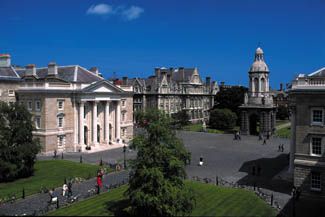
Trinity College (Book of Kells & Dublin Experience) +353 (0)1 608 2308
Viking Adventure Essex St W, Temple Bar, +353 (0)1 679 6040
Viking Splash (Amphibious Tours) +353 (0)1 453 9185
War Memorial Gardens (Sir Edwin Lutyens) Islandbridge +353 (0)1 677 0236
Zoological Gardens Phoenix Park +353 (0)1 677 1425


.jpg "The College Green Hotel")










There are currently no comments
Leave a comment
Not a member? Register for your free membership now!
Or leave a comment by logging in with: