

Thinking back over our recent Irish Food & Hospitality Awards, every participant is very special and the highlights are too many to mention in ...
Cookery Feature - Gorgeous Brown Bread & Hearty Soups


It’s coming up to lunch time as I write this on a cold and blustery January day, and I can’t think of anything better as a reward than a bowl of one of the hearty soups below with some of The Mustard Seed’s gorgeous brown bread, lashings of butter and a wedge or two of one of our delicious farmhouse cheeses – Gubbeen or Durrus, perhaps… Wonderful at any time of year, but perhaps especially irresistibly satisfying in winter, this combination is always a treat. Deliciously simple real food - that’s one of the things we’re best at these days in Ireland and it’s always worth remembering.
The Mustard Seed Brown Bread is the current winner of the Irish Bread Award, an important accolade that has been part of our annual awards since the early 1990s. Originally the idea of Donegal native and former Director General of Bord Fáilte (now Fáilte Ireland) Matt McNulty - a man with great respect for all aspects of Irish heritage and culture - it recognises the deep value of this delicious mainstay of the Irish table, and reminds us that doing the small things well can have a big impact. And, although we all love sourdough too these days, the authentic role of our traditional soda bread deserves to be cherished. Perfect for breakfast (see below), or for lunch with soup and a chunk of handmade cheese or smoked salmon – the unique Guinness Smoked Salmon by Kish Fish, perhaps, winners of our Innovation Award 2025 - it never fails to delight and sustain.
 MUSTARD SEED BROWN BREAD
At the delightful Blue Book property, The Mustard Seed in Ballingarry, Co Limerick, one of many treats enjoyed by guests is the array of home-baked loaves and scones, baked daily in-house. And, served alongside home-grown fruit (from an orchard that’s in sight from the kitchen), carefully cooked hot dishes and many thoughtful details including local preserves and honey, the quiet star of the morning table is their freshly baked brown bread. This simple pleasure is one of the most memorable aspects of a visit here and - understanding its emotional value – proprietor John Edward Joyce uses The Mustard Seed’s traditional brown bread as a charming love bomb, presenting a loaf to guests on departure, to see them happy on their way. Makes 2 loaves.
Dry ingredients
500g wholemeal flour
125g strong flour
50g sunflower seeds
50g pumpkin seeds
50g porridge oatflakes
25g bread soda
15g salt
Wet ingredients
1litre buttermilk
50g butter, melted
75ml, treacle (or to taste)
1 egg beaten
Method
Pre-heat a moderate oven, 160ºC.
Mix all of the dry ingredients really well.
Dissolve the treacle and butter together and warm slightly.
Pour into the dry mixture, along with the buttermilk and beaten egg. Combine well by hand.
Divide the mixture between two, well greased, 2lb/900g loaf tins.
Bake at 160ºC for 1 hour, then remove from tins and bake for a further 20 minutes on oven racks.
Test the bread by inserting a skewer and when it comes out clean, the bread is cooked. Cool the loaves on a wire rack. While cooling, it may be covered with a damp tea towel to prevent it from being too crusty.
 ONION SOUP
Onion soup seems to be having a moment, which is very good news – we have enjoyed several delicious versions over this winter. This recipe is from Gubbeen, The Story of a Working Farm and Its Foods by Giana Ferguson (photography by Andy Sewell; Kyle Books, hardback. Further information from Gubbeen: https://gubbeen.com/
“There is a reason why onion soup is a classic”, says Giana:”It has a perfect flavour and it is extremely nourishing. Our addition to this lovely dish is to break the bread into nice random crouton pieces, rather than cut slices, and have lots of runny Gubbeen cheese rolling off them, which makes this very good indeed. To get the best results from this dish use a cast-iron pan with a lid such as a Le Creuset casserole.” Serves 4
Ingredients for the soup
50g unsalted butter
6 large onions, thinly sliced
1 teaspoon sea salt
1 tablespoon Mushroom Ketchup or sherry vinegar
1 litre beef or chicken stock
100ml brandy, or to taste
For the croutons
Handful of day-old bread, torn into bite-sized pieces
1 teaspoon mild olive oil
80g Gubbeen cheese, sliced
Preheat the oven to 200°C/gas mark 6.
Set a pan over a low heat. Heat the butter until it starts to bubble, add the onions and the salt, cover with the lid and gently steam. Remove the lid when the onions are tender and increase the heat gradually to medium, stirring until the onions turn a pleasing brown colour. Add the Mushroom Ketchup (or sherry vinegar), pour in the stock a little at a time and work any
caramelised bits from the base of the pan into the soup.
To make the croutons, toss the bread in the olive oil to coat very lightly and bake in the oven on a tray lined with parchment paper until golden. Place the cheese on top of the croutons for a minute or two until just melted.
Stir the brandy into the soup and check the seasoning. Scoop the cheesy croutons on top of the soup, and serve in the pot from the middle of the table.
 BORLOTTI BEAN, PARSLEY AND BREAD SOUP
Michael Kelly of GIY in Waterford introduced me to this recipe and – as you would expect with a recommendation from the man behind Grow HQ Café and Larder, which was awarded our Bord Bia sponsored Best Supporter Of Irish Food & Drink Producers title for 2025 - it is pretty well perfect. From The Kitchen Orchard by Natalia Conroy (Ebury), this one-pot veggie wonder is crammed with healthy vegetables, herbs and pulses - and, like the Gubbeen Onion Soup above, it also uses up stale bread.
Ingredients
6 tbsp olive oil
3 red onions, peeled and finely chopped
5 garlic cloves, peeled and finely chopped
3 carrots, roughly chopped
2 heads celery, outer branches removed, hearts roughly chopped
1 bunch parsley leaves, roughly chopped
5 tbsp tinned chopped tomatoes
1 bunch cavolo nero, chopped
500g cooked borlotti beans, cooking liquor reserved
¾ loaf stale white bread or ciabatta, crust removed, cut into 2.5cm thick wedges
Plenty of good olive oil
600ml boiling water
Salt and black pepper
Method
In a large heavy-based pot, gently cook the onions, garlic, carrots, celery and parsley uncovered in the olive oil for about one hour over a low heat.
When these are entirely soft, add the tomatoes and continue to cook for a further 15 minutes. Stir in the cavolo nero and set aside.
Pour half the beans with half their cooking liquid into a food processor. Pulse until smooth, then add to the vegetables. Strain the other half of the beans and add them to the soup. Lay the bread gently on top of the soup to form a sort of lid, and then cover with plenty of olive oil. Pour the boiling water over the bread and leave the soup to cook very gently for 10 minutes, then leave to sit off the heat for a further 10 minutes. The bread should be completely soft.
Gently break up the bread lid and fold it into the rest of the soup. Season if need be, and serve with some more olive oil on top – the soup should be thick enough that you can stand up a spoon in it.
By same author
-
MEET THE NEW IRISH WINE MAKERS ASSOCIATION
Cookery Feature - Irish Whiskey Cookbook
For anyone unfamiliar with the story of Irish whiskey, the press release that accompanied Oisín Davis’s new book The Irish Whiskey Co ...2026 Georgina Campbell Irish Food & Hospit ...
Winners of the Georgina Campbell 2026 Irish Food & Hospitality Awards announcedCookery Feature - Foxford Favourites
Our travels around the country this year have been brilliant so far, thanks to the exceptional weather and – envisaging it from a visitor&rs ...Cookery & Artisan Foods - Inspired by BLOOM
The June bank holiday weekend had plenty going for it this year – not least the sunshine – and Bord Bia Bloom celebrated its 20th year ...Cookery & Food Tourism Feature - Waterford ...
Now well established as a major player in Irish food and tourism, Waterford was blessed with fine weather recently for the 17th Waterford Festival ...Gearoid Lynch - One Of The Greats
We are saddened by the recent death, after a long illness, of Gearóid Lynch, a great chef and co-owner, with his wife Tara, of the delightf ...Cookery Feature - Loaf Tin Bakes
In this time of apartment living and shortage of storage space, coming up with a book of recipes that covers a wide range of options but only need ...Cookery Feature - The Irish Food Writers' Guil ...
Going strong since 1993, The Irish Food Writers' Guild Food Awards were established with a simple aim: to celebrate indigenous Irish food products ...Cookery Feature - Beans, Beautiful Beans
Chef Ali Honour's lovely little book all about beans hit the shelves at the end of January and it couldn’t be more welcome. Having earned he ...Articles
-
THE DARINA ALLEN COLUMN - Exploring Armagh
This month Darina recalls a fascinating Irish Food Writers’ Guild outing to the beautiful Orchard County2026 Georgina Campbell Irish Food & Hospitality ...
Winners of the Georgina Campbell 2026 Irish Food & Hospitality Awards announcedApps and Books
-
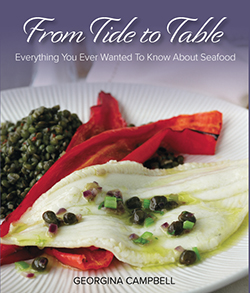
From Tide to Table by Georgina Campbell
Paperback edition of From Tide to Table - Everything You Ever Wanted To Know About Buying, Preparing & Cooking Fish and Seafood by Georgina Campbell
There are currently no comments
Leave a comment
Not a member? Register for your free membership now!
Or leave a comment by logging in with: